
Quick answer: The five resources we send couples to most often are Codependent No More (Melody Beattie), The Three Faces of Victim (Lynn Forrest), Your Brain on Love (Stan Tatkin), Atlas of the Heart (Brené Brown), and Developing Habits for Relationship Success (Brent Atkinson). Below, we explain what each one fixes, who it’s for, and where to start if you can only pick one.
Relationship advice is everywhere right now, and most of it is noise — vague, romanticized, or built for engagement rather than for couples who are actually struggling. As the Northampton Center for Couples Therapy — the only practice in New England devoted exclusively to couples — we’ve spent over 20 years and 4,500+ couples figuring out which resources actually move people out of crisis. These five are the ones we hand out again and again, whether you’re local to us in Massachusetts or working with us by telehealth from elsewhere in New England, because the specific problem you’re facing is rarely as unique as it feels — even if your relationship is.
This list also matters more than it used to. Couples therapists are in short supply nationally, and wait times for a first appointment keep growing. If you’re in the middle of it right now and can’t wait, our Urgent Care option is built for exactly that. Otherwise, these five resources give you tools you can use on your own tonight — not in six weeks.
If we were stranded on a desert island with our own partners, mid-gridlock, riding a wave of negative sentiment, these are the five things we’d want packed in our bags.
5. Codependent No More by Melody Beattie
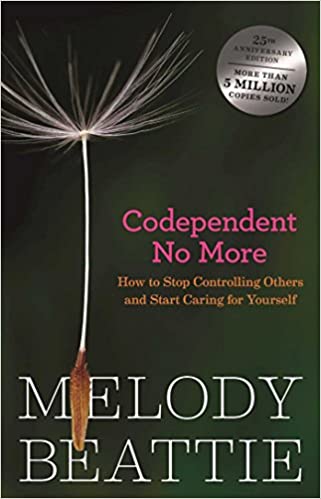
Best for: Couples where one partner has lost their own identity inside the relationship, or can’t tell where their responsibility ends and their partner’s begins.
We resisted this book for decades, assuming it was pop-psychology filler. We were wrong. If you struggle to set boundaries that are both compassionate and firm — or you’ve quietly taken on your partner’s problems as your own — this is the clearest, most practical guide we know for getting your footing back.
4. The Three Faces of Victim by Lynn Forrest
Best for: Couples who keep having the same fight in different clothing and can’t figure out why.
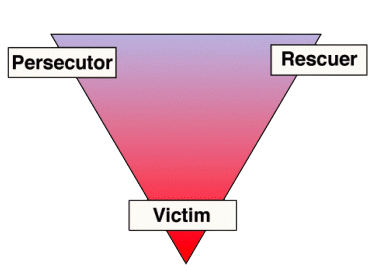
This free article is required reading for every new couple who starts therapy with us. It walks through the Karpman Drama Triangle — Victim, Rescuer, Persecutor — and helps you spot your own default role under stress. Nobody stays in one corner of this triangle. The goal isn’t to diagnose your partner; it’s to recognize your own pattern before it turns into a shame spiral that keeps the fight alive.
3. Your Brain on Love by Stan Tatkin
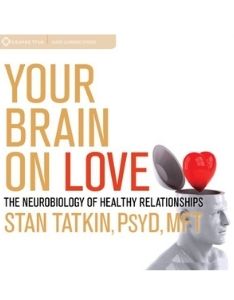
Best for: Couples who want the science of attachment, not just the vocabulary of it.
Tatkin, founder of the Psychobiological Approach to Couples Therapy (PACT), built this audiobook around one idea: security is built, not found. In a culture that prizes independence over interdependence, his framework for a “we-centered” partnership is a genuinely useful counterweight — and the audio format makes it easy to absorb during a commute instead of adding one more thing to a reading list.
2. Atlas of the Heart by Brené Brown
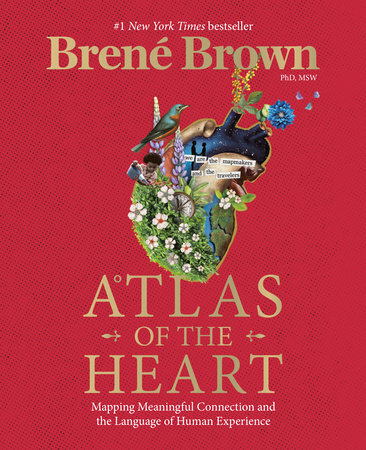
Best for: Couples who fight about the same feeling without ever agreeing on what to call it.
This isn’t a couples book, and it isn’t trying to be. That’s part of why it works. Brown maps 87 distinct human emotions and experiences — the difference between disappointment and regret, between anxiety and overwhelm — because you can’t work with a feeling you can’t name. In our experience, most relationship conflict isn’t a disagreement about facts; it’s two people reaching for the nearest available word (“fine,” “annoyed,” “done”) when the actual feeling underneath is something far more specific. Emotional literacy — the ability to say precisely what you feel instead of what’s closest at hand — is one of the most underrated relationship skills there is, and this book builds it directly. If you read nothing else on this list, read this one.
1. Developing Habits for Relationship Success by Brent Atkinson
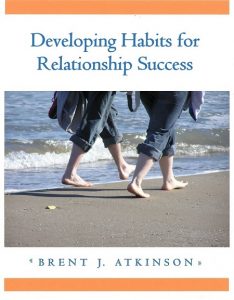
Best for: Every couple.
If we could hand every couple exactly one book, this is it. Atkinson, founder of the Pragmatic/Experiential Method (PEX), built something unusual: a resource that works even when only one person in the relationship uses it. That matters enormously if your partner won’t come to couples therapy or won’t accept your influence no matter how skillfully you offer it. But it’s not just a fallback for that situation — the book is genuinely useful for any couple, because its core premise applies universally: relationships change the most not when both people are calm and reasonable, but when you know how to be effective with your partner at their worst. Most relationship advice assumes good conditions. This one teaches you what to actually do in the moment things go sideways, which is where change either happens or doesn’t.
This book is standard reading for all of our intensive couples. Between the exercises, concrete tools, and audio clips for in-the-moment meltdowns, our clients tell us this is the single most useful thing they’ve read. We believe them.
Where to start if you’re in crisis right now
You don’t need all five at once. Start with the problem that’s loudest:
- Losing yourself in the relationship? Start with Codependent No More.
- Same fight, different day? Start with The Three Faces of Victim.
- Want the “why,” not just the “what”? Start with Your Brain on Love.
- Can’t tell your partner what you’re actually feeling — just that something’s wrong? Start with Atlas of the Heart.
- Not sure where to start? Start with Developing Habits for Relationship Success — it’s the one we’d hand every couple if we could only give one.
If you’re ready for more support than a book can give
These resources genuinely help — but they have limits, especially if you’re past the point of being able to work through things on your own. If that’s where you are, couples therapy can move things faster and further, urgent care is available if you need to be seen immediately or want to meet just once before committing to ongoing work, and intensives compress months of work into a focused block of time — in person in Northampton or by telehealth anywhere in Massachusetts and New England. You can also just reach out, and we’ll help you figure out which fits.
FAQ
What’s the best book on this list? Developing Habits for Relationship Success by Brent Atkinson. It’s the single resource we’d hand every couple if we could only pick one — and it happens to also be the one that still works if your partner won’t go to therapy or won’t engage, because it’s built to create change even when only one partner uses it.
Why does naming emotions matter that much in a relationship? Because most fights aren’t actually about the topic on the surface. When you can only say “I’m annoyed” or “I’m fine,” you and your partner end up negotiating over vague, interchangeable words instead of what’s actually going on. Atlas of the Heart exists to close that gap — it’s a map for saying what you mean instead of what’s closest at hand.
We’re in crisis and can’t wait weeks for a first appointment — what do we do? That’s exactly what our Urgent Care option is for. Standard intake timelines don’t work for a couple who needs support this week, so we built a faster path in.
Can we really do this without a therapist, or do we need professional help? Depends on how far things have gone. These resources genuinely shift real dynamics on their own, especially early. But once patterns are entrenched — recurring blowups, checked-out silence, active infidelity — a book won’t out-pace what’s happening. That’s when couples therapy or an intensive does what reading alone can’t.